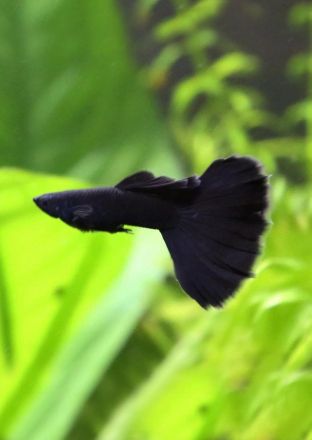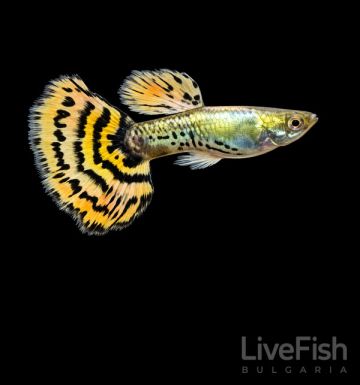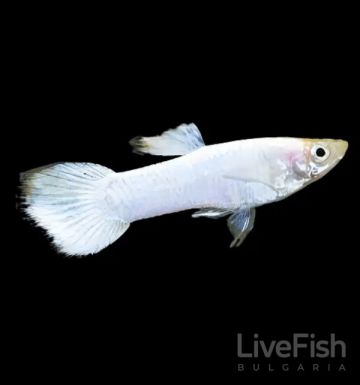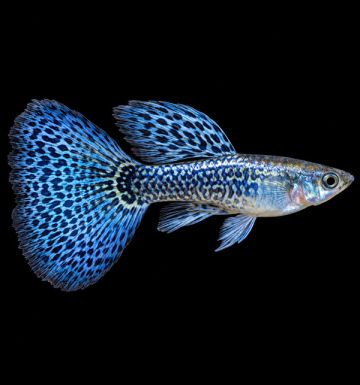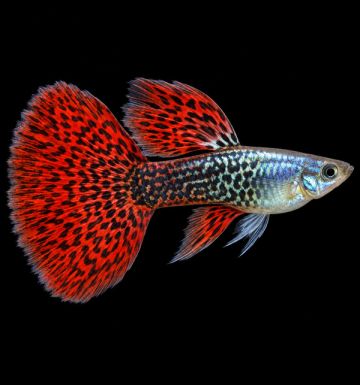
BLUE TOPAZ GUPPY / 3 CM
-
Code:278
-
Weight:0.100 Kgs
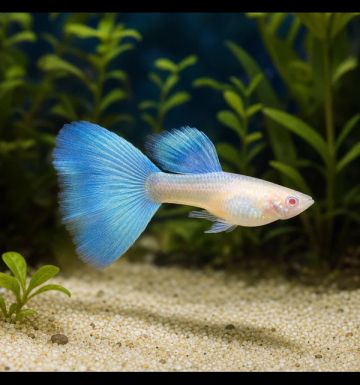
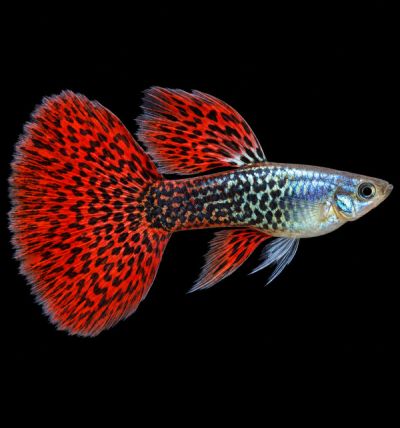
Blue Topaz Guppy (Poecilia reticulata) is an elegant selectively bred guppy with brilliant blue to blue-turquoise colouring and beautifully developed fins. Its metallic sheen resembles the colour of blue topaz and changes with the lighting. Peaceful, active and easy to feed, this variety is suitable for planted aquariums and carefully selected community tanks.
Quick Buy


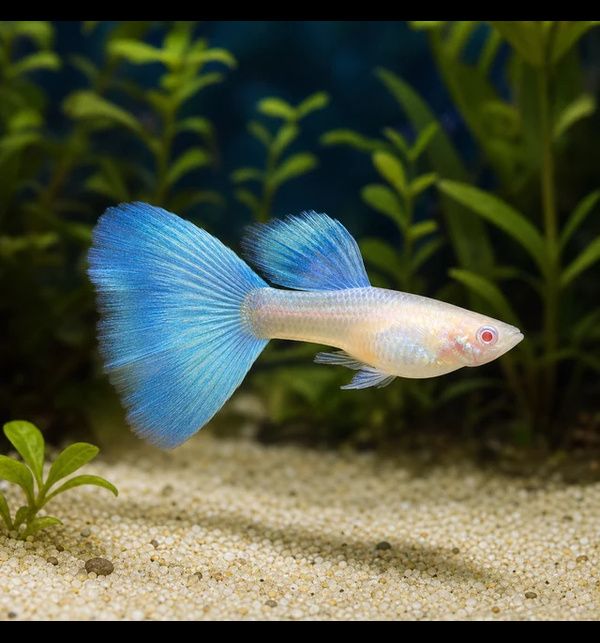
Blue Topaz Guppy – a guppy with a brilliant blue-turquoise colour
Blue Topaz Guppy is a selectively bred colour variety of Poecilia reticulata. The name is used for guppies with bright blue, blue-green or turquoise metallic colouring that resembles the lustre of the blue topaz gemstone.
Blue Topaz is not a separate wild species, and the name is not a fully standardised international genetic designation. Depending on the breeder, lines may differ in shade, distribution of blue, base body colour and fin shape.
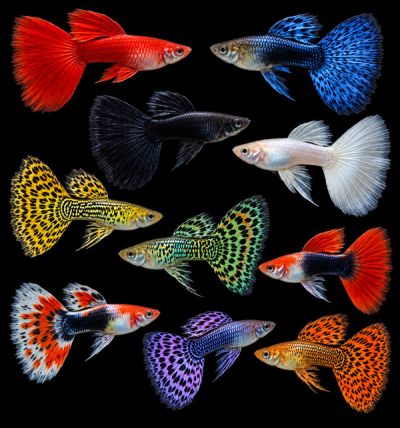
This variety should not automatically be confused with Blue Moscow, Japanese Blue, Blue Grass or other blue lines. These names may refer to different colour mechanisms, patterns and breeding origins.
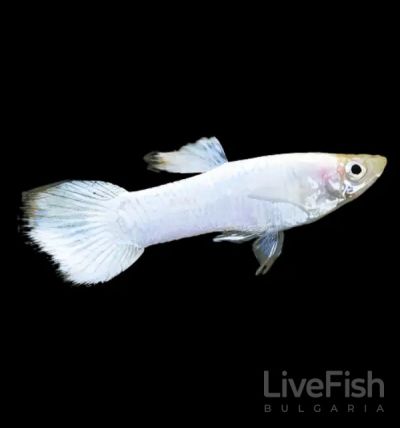
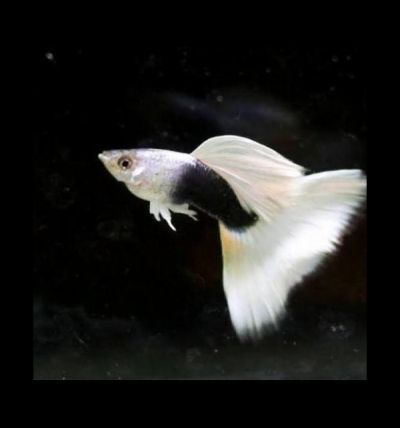
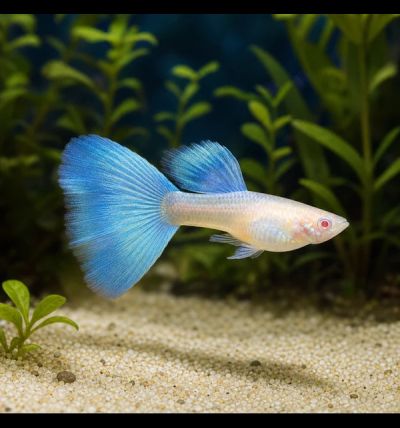
Albino Blue Topaz Guppy also exists. The albino form is identified by its pink or red eyes and lighter body colour. Standard Blue Topaz Guppies usually have normally pigmented dark eyes.
Appearance and distinguishing features
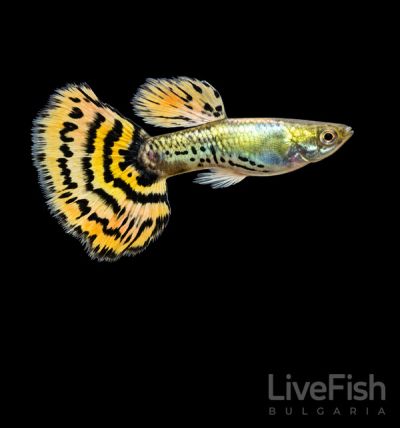
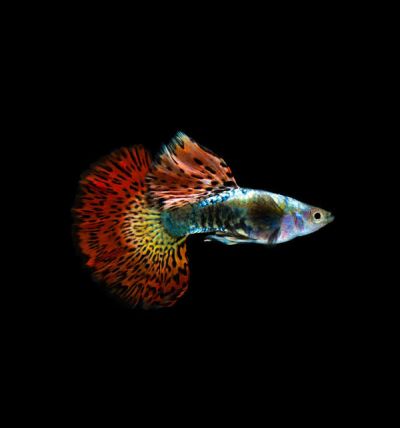
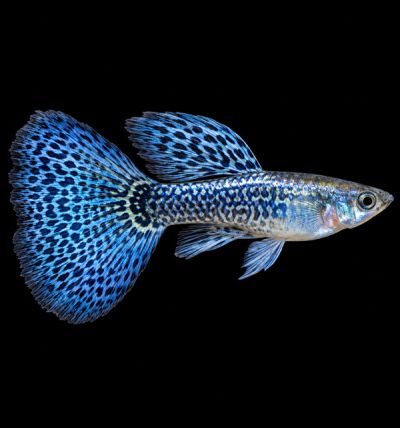
Males are smaller, slimmer and considerably more brightly coloured. Their bodies may show a metallic blue, aquamarine, turquoise or greenish sheen that changes with the viewing angle and lighting.
The caudal and dorsal fins are usually blue to blue-green, sometimes with transparent, white, violet or darker areas. In many lines, males develop a broad delta-shaped tail and a well-defined dorsal fin.
Females are larger and have a rounder body. Their colouring is usually lighter and more subdued, but well-bred females may show a bluish tail, metallic patches and a cool silvery tint on the body.
Males can be identified by the gonopodium, a modified anal fin used for internal fertilisation. Females have a normal fan-shaped anal fin and often a visible gravid spot on the rear part of the abdomen.
The blue colouring develops gradually as the fish matures. Its intensity depends on genetics, sex, diet, lighting, water quality and stress levels.
Key parameters
| Scientific name | Poecilia reticulata |
| Selectively bred variety | Blue Topaz Guppy |
| Common name | Blue Topaz Guppy |
| Family | Poeciliidae |
| Type | Selectively bred livebearing guppy |
| Origin | Selectively bred aquarium form; the wild species originates from northeastern South America and the southern Caribbean |
| Adult size | Males around 3–5 cm; females around 5–6 cm, excluding the extra length of a highly developed tail |
| Recommended aquarium | From 60 litres and at least 60 cm long; larger for a breeding group |
| Temperature | 23–26°C; approximate acceptable range 22–28°C |
| pH | 7.0–8.0 |
| Hardness | 8–20 dGH |
| Diet | Omnivorous – high-quality dry, live, frozen and plant-based foods |
| Behaviour | Peaceful, active and social |
| Swimming zone | Mainly the middle and upper levels |
| Recommended group | At least 5–6 specimens; for a mixed-sex group, 1 male to 2–3 females |
| Care level | Easy with stable parameters and proper maintenance |
Aquarium and proper care
Blue Topaz Guppy should be kept in a fully cycled aquarium with effective biological filtration. Ammonia and nitrite should always be at 0 mg/l, while nitrate should be kept low through moderate feeding and regular partial water changes.
An aquarium of at least 60 litres and 60 cm in length is recommended for a small group. A larger volume provides more stable conditions and is especially suitable for a mixed-sex group, whose population can increase quickly.
The aquarium should offer both planted areas and open swimming space. Suitable plants include Vallisneria, Cryptocoryne, Anubias, Microsorum, Java moss and floating plants.
Dense plants provide quiet areas for females and hiding places for newborn fry. Floating plants can soften the lighting and highlight the metallic blue-turquoise sheen.
Filtration should keep the water clean and well oxygenated without creating an excessively strong current. Males with broad selectively bred tails may tire in a continuous strong flow.
Guppies prefer moderately hard to hard water that is neutral to slightly alkaline. Long-term keeping in very soft, acidic water may weaken selectively bred fish.
If reverse-osmosis water is used, it must be properly remineralised. Routine aquarium salt additions are not necessary for healthy fish kept in suitably mineralised freshwater.
The aquarium should have a lid or cover glass, as guppies can jump.
Behaviour and compatibility
Blue Topaz Guppy is a peaceful, active and social fish. It is suitable for a community aquarium with other peaceful species that prefer similar temperatures and moderately hard, neutral to slightly alkaline water.
Suitable tankmates may include platies, mollies, some Corydoras, small peaceful rainbowfish and other calm livebearers. Choose each species according to the specific water parameters and aquarium size.
Avoid aggressive, large or predatory fish, as well as species that nip fins. Males with broad tails are slower and especially vulnerable.
Males actively court females. In a mixed-sex group, keep two or three females for every male to spread the attention and reduce constant stress.
If breeding is not desired, a group of males can be kept together. Provide enough space, plants and visual barriers to limit brief chases.
To preserve the Blue Topaz line, do not breed these fish with other guppy varieties. Offspring from mixed lines may lose the characteristic colouring and develop unpredictable colours and patterns.
Feeding
Blue Topaz Guppy is omnivorous and should receive a varied diet in appropriately sized portions. The staple diet may include high-quality fine flakes or micro-pellets for guppies and other small livebearers.
Brine shrimp, daphnia, cyclops, microworms, small bloodworm larvae and other suitable live or frozen foods support healthy development and condition.
Foods containing spirulina, algae and other plant ingredients provide nutritional balance. They support digestion and the fish’s overall condition.
Blue colouring is mainly produced by genetically determined pigment and reflective cells. High-quality food cannot turn a genetically different guppy into a Blue Topaz, but it can support the natural sheen, fin development and overall condition.
Offer small portions once or twice a day. Avoid overfeeding, as it quickly reduces water quality.
Breeding
Blue Topaz Guppy is a livebearer and breeds readily in suitable conditions. Fertilisation is internal, and the female gives birth to fully formed fry that can swim and eat fine foods immediately.
Pregnancy usually lasts around four to six weeks. The number of fry depends on the female’s age, size, genetics and overall condition.
Dense plants, Java moss and floating vegetation provide hiding places for newborn fry. Adults may eat the fry if there are not enough protected areas.
Newborn fry can be fed newly hatched brine shrimp, microworms, finely crushed dry food and specialised foods for livebearer fry.
A female can store viable sperm and produce several successive broods after a single fertilisation. For this reason, the first broods from a purchased adult female may not be sired by the male currently in the aquarium.
To preserve the characteristic blue-turquoise colouring, select parents carefully from the same established line. Not all fry will necessarily show the same shade, tail shape or intensity of metallic sheen.
Important features
- Blue Topaz Guppy is a selectively bred variety, not a separate wild species.
- The name Blue Topaz is not fully standardised among all breeders.
- The shade may range from light blue and turquoise to blue-green.
- The metallic sheen changes with lighting and viewing angle.
- Blue Topaz, Blue Moscow, Japanese Blue and Blue Grass are not automatically the same line.
- Standard Blue Topaz usually has dark eyes.
- Albino Blue Topaz is identified by its pink or red eyes.
- Males are usually smaller and more brightly coloured than females.
- For a mixed-sex group, keep 2–3 females for every male.
- An all-male group is suitable if breeding is not desired.
- To preserve the line, do not crossbreed with other guppies.
- Females can store sperm and produce successive broods.
- Adults may eat newborn fry if plants and hiding places are lacking.
- Males with large tails should not be kept with fin-nipping fish.
Blue Topaz Guppy from LiveFish Bulgaria
Blue Topaz Guppy is an excellent choice for aquarists looking for an elegant guppy with cool blue-turquoise colouring and a metallic sheen. Its colour stands out beautifully among green plants, against a dark background and under carefully selected aquarium lighting.
With stable, mineralised water, a varied diet and a well-chosen group, Blue Topaz Guppy displays its best colours and becomes a stylish focal point in a planted or community aquarium.
-
-
-
-
-
-
-
-
BLUE TOPAZ GUPPY / 3 CM
Price: €3.00 -
-
Who it’s for
Blue Topaz Guppy is suitable for beginner and experienced aquarists looking for a small, peaceful and active fish with blue-turquoise metallic colouring. It thrives in a mature planted or community aquarium with stable, neutral to slightly alkaline, moderately hard water. It is also suitable for breeders who want to maintain a separate Blue Topaz line.
Key features
• Scientific name: Poecilia reticulata • Selectively bred variety: Blue Topaz Guppy • Common name: Blue Topaz Guppy • Family: Poeciliidae • Type: selectively bred livebearing guppy • Size: males around 3–5 cm; females around 5–6 cm • Temperature: 23–26°C • Acceptable temperature range: approximately 22–28°C • pH: 7.0–8.0 • Hardness: 8–20 dGH • Recommended aquarium: at least 60 litres and 60 cm long • Diet: omnivorous • Behaviour: peaceful, active and social • Recommended group: at least 5–6 specimens • Male-to-female ratio in a mixed-sex group: 1 male to 2–3 females • Care level: easy
Unique differentiators
• Brilliant blue to blue-turquoise colouring • Beautiful metallic sheen • Well-developed dorsal and caudal fins • Strong contrast against green plants • Peaceful, social behaviour • Suitable for planted and community aquariums • Active and easy to observe • Accepts a varied range of aquarium foods • Suitable for beginners when kept in stable water • Breeds readily in the right conditions
Why this product
Choose Blue Topaz Guppy if you are looking for an elegant selectively bred guppy with brilliant blue, turquoise or blue-green colouring. Its metallic sheen changes with the lighting and creates a striking contrast against green plants. Its peaceful behaviour and easy feeding make this variety an excellent choice for a well-maintained planted or community aquarium.
FAQ
Question: Is Blue Topaz Guppy a separate species? Answer: No. It is a selectively bred colour variety of Poecilia reticulata.
Question: What colour is Blue Topaz Guppy? Answer: Its colour may range from light blue and aquamarine to turquoise or blue-green, with a metallic sheen.
Question: Do all Blue Topaz Guppies look the same? Answer: No. The shade, distribution of blue and fin shape may vary depending on the selectively bred line, sex, age and individual specimen.
Question: Are Blue Topaz and Blue Moscow the same? Answer: Not necessarily. These are different trade and breeding names that may refer to different origins and distributions of blue colouring.
Question: Are Blue Topaz and Japanese Blue the same? Answer: No. Japanese Blue usually refers to a specific blue metallic pattern, while Blue Topaz is a trade name for lines with a blue-turquoise, topaz-like appearance.
Question: How does standard Blue Topaz differ from Albino Blue Topaz? Answer: The standard form usually has dark eyes. Albino Blue Topaz has pink or red eyes and a lighter body base colour.
Question: How large does Blue Topaz Guppy grow? Answer: Males usually reach around 3–5 cm, while females reach around 5–6 cm. A highly developed tail may increase the overall visible length.
Question: What size aquarium does it need? Answer: An aquarium of at least 60 litres and 60 cm in length is recommended. A larger volume is needed for a breeding group.
Question: How many guppies should be kept together? Answer: A group of at least 5–6 fish is suitable. In a mixed-sex group, keep two or three females for every male.
Question: Can only males be kept together? Answer: Yes. An all-male group is suitable if you want a colourful aquarium without continuous breeding.
Question: How can its vibrant blue colour be maintained? Answer: Good genetics, stable water, low stress levels and a varied diet are essential. Suitable lighting highlights the metallic sheen but does not change the genetically determined colour.
Question: What does Blue Topaz Guppy eat? Answer: Suitable foods include high-quality fine flakes and micro-pellets, supplemented with brine shrimp, daphnia, cyclops, small frozen foods and products containing plant ingredients.
Question: Is it suitable for a community aquarium? Answer: Yes, if the other fish are peaceful, prefer similar water parameters and do not nip fins.
Question: How can the Blue Topaz line be kept pure? Answer: Breed these fish separately from other guppy varieties and select parents with the characteristic blue-turquoise colouring.
Question: Can a female give birth to fry that were not fathered by the current male? Answer: Yes. Females can store viable sperm and produce several broods after an earlier fertilisation.
Question: Does salt need to be added? Answer: No. Routine salt additions are not necessary for healthy fish kept in suitably mineralised freshwater.